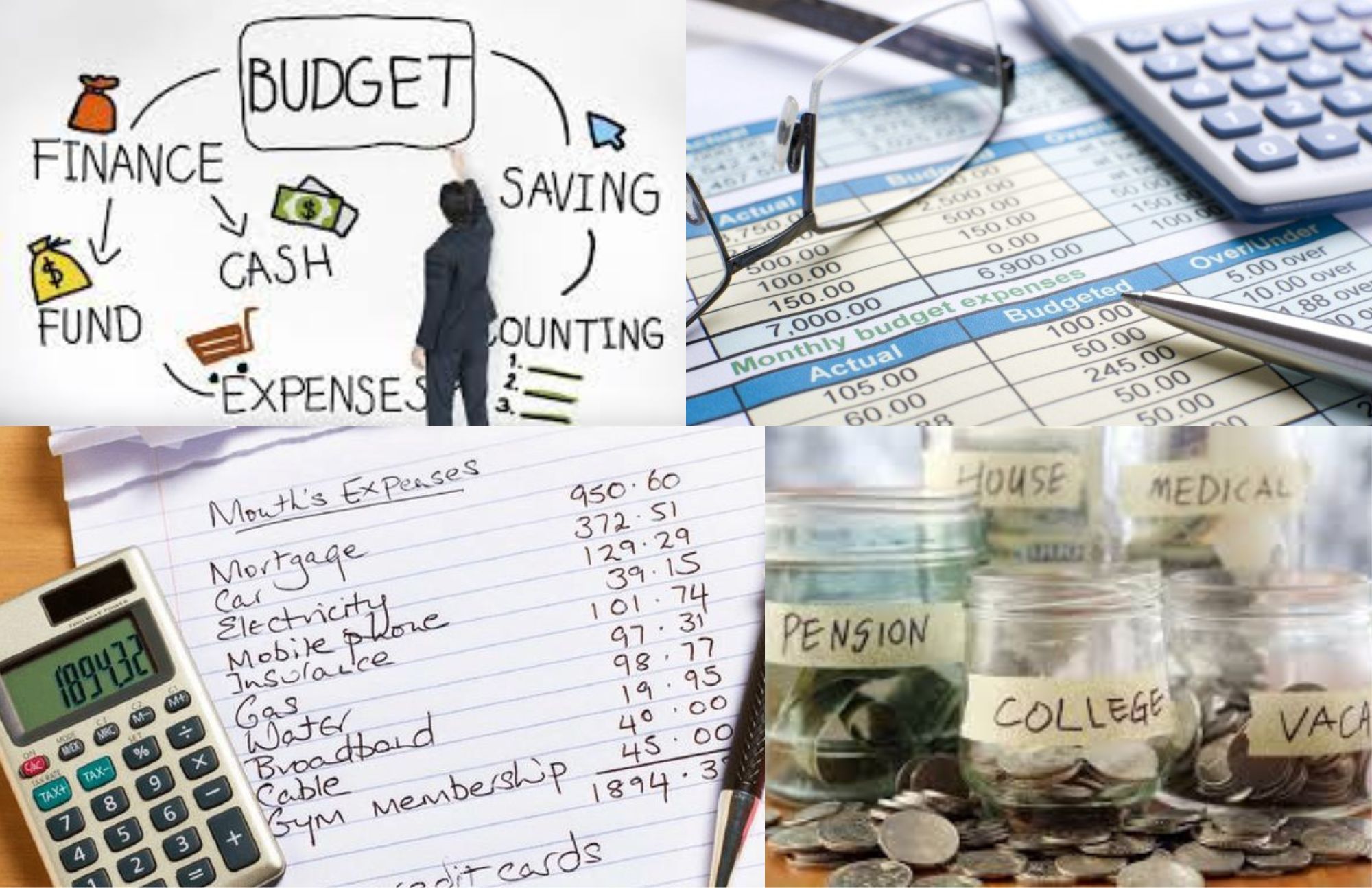
Although maintaining a budget is difficult, it is vital for reaching your goals. Most people may have tried to stay within their budget, but they eventually give up. This is normal, but if you learn the skill and maintain your discipline, you’ll discover that you’ll stay on track, stick to your spending plan, and increase your savings.
Here are a few motivating ways to get you to stick to the budget, and eventually start saving more.
- Create a Budget
In the current economy, it is important that everyone has a budget, regardless of the income or revenue and regardless of their monthly expenses, whether they are few or not.
Your budget should like the one below if you’re employed and earn roughly $2,000 each month. No matter how small an item may be, it should be included in your budget. This is how budgeting will go in your favour.
A simple Budget on Excelsheet
This structure is clear and concise. You will be able to keep track of all your earnings and expense at any moment. The date can be easily entered. If you have many accounts, you’ll be able to keep good track of both the amount and bank account from which you’ve made withdrawals from.

- Spend less, Save More
Stop spending money on things you can go without as a technique to stay within your budget, and instead put it in savings. By doing so, you will accomplish two goals at once. Spending less and saving more is the trend due to the current inflation. Today’s billionaires achieved their success by using such practices.
Your savings account will be overflowing in no time, putting a big smile on your face. To do this, cut costs or stop spending totally on things like entertainment, expensive clothing or only occasionally buy clothing and shoes, and home improvement, and transfer the money you would have spent on them to savings monthly.
- Set Savings Goal
Setting goals is vital when creating a budget because saving is a component of the budget. I’ve kept an excel sheet with all the financial information record. The monthly budget is on a single sheet. I keep track of my savings on sheet two. Additionally, there is a sheet for objectives, which I update as new information emerges.
Set the following objectives:
Short Term Goals
Have three to nine months’ worth of your crucial monthly expenses set up in an emergency fund. These costs include rent, food and groceries, utility bills, transportation, debt repayment, health insurance, and other expenses. The costs could differ from person to person. Additionally, keep a sinking fund. For this type of fund, clear goals should be set because it is maintained for certain purposes such as house improvement, school fees, gifts, car insurance and maintenance, new car tyre purchases, car servicing and others.
Long Term Goals
You will need to save money on a regular basis, preferably once a month, to achieve these long-term goals. Several years are needed to get there. Retirement fund, buying a home, business venture, college savings for the kids, treasury bond investment, among other things, are some of these objectives.
- Where to Shop
Your budget and savings can be significantly impacted, either favourably or unfavourably, by where you buy food, groceries, clothing, and even your insurance. There are many apps available nowadays that offer good discounts, usually on necessities like food items, depending on the Country in which you live. You can easily find an app that will fit your budget depending on the items you wish to buy by searching on Google. Depending on how much money you spend on your purchases, they will also deliver to your doorstep at a minimal delivery fee or for free.
- Living on a Single Source of Income
Most people mistakenly think that having multiple sources of income will enable them to save money and live comfortably. The only thing that can help you manage both, whether you have one or many ways to earn money, is discipline.
Believe it or not, I just have one source of income for now, but I don’t just sit around doing nothing. Writing an article like this is one of the ways I’m attempting to see if I can add another source of income. However, just because I continue to hope to get some passive income from my blog doesn’t mean that the income that I earn isn’t enough to cover my bills and savings. What led me to this was that I had worked extremely hard to invest in real estate, starting this blog and other ventures, but along the way I noticed I was spending money attempting to invest but they were not working. Therefore, I made the decision to start budgeting for every little item and paying myself.
Here are a few ways that have helped me succeed on a single income:
Budgeting for Everything
On an excel document, I keep track of all my expenses. I pay all my monthly bills, make my debt payments, and save money for both short- and long-term investments as soon as I receive my income. I use the remaining money to buy any other necessary expenses. I keep track of every expense, regardless of how little. I don’t travel often, so I don’t do impulse buying. I don’t go shopping for clothing before having saved for it for roughly three months.
Putting My Savings in a Money Market Fund
I put all my savings in a Money Market Fund account since it is difficult to have access to that account. It’s nearly impossible for me to obtain the money once I’ve deposited it. Furthermore, the interest rate is favourable with the MMF account. I thereby accomplish two goals at once by saving the little sum of money I can spare in an MMF account because I am also earning interest. My current interest rate is around $200 per month, and it will keep growing. Once I deposit the money, I don’t take it out, thus the fund keeps increasing thanks to my savings and interest because the interest is compounded. With just one source of income, success depends on discipline and consistency.
Disclaimer: I haven’t suggested it’s proper for someone to live on one income, but I’m simply trying to give you some encouragement by saying that you can still live comfortably even if you just have one source of income while looking for other ways to make more money. All you must do is create and follow a budget. While I am diligently sourcing multiple sources of income, I am doing so in a calm manner. When you develop the ability to manage with one, you will naturally become wealthy when you have several.
- Learn to Say No When It’s Necessary
Often when we go into a store, we discover there are foodstuffs on sale. We believe we will save money by purchasing them because they are on sale, yet we already have enough. When this happens, it’s crucial to say to yourself, “Not today.” Yes, it is on sale, but is it included in your budget as something you want to buy at that moment?
Knowing when to say no to things you see other people having, such as expensive furniture, designer clothes, lunch at Java’s, and so forth. You don’t have to be like them just because they are your friends, family, and colleagues. If you conduct a thorough investigation, you may possibly find that you are in a favourable position than them. The fact that wealthy individuals don’t live, or dress extravagantly is one of the life’s secrets I’ve learned. Despite having all the wealth, they stick to their budget and save more.
- Avoid Debt
Have you ever thought about the reasons behind your debt? was it necessary to borrow? or was it a result of your failure to stick to your budget? We may incur debt to purchase a home. This kind of debt is relevant. However, the small debts we have are because of overspending, which arises when we go shopping without first writing down or checking our budget. It’s also important to just spend what you have planned for to prevent needless debt. Save for what isn’t budgeted for because it’s probably not needed right then.
- Find a Buddy with Stronger Financial Discipline
This is what has motivated me to save money that I had never thought I could in my entire life. My two closest buddies have excellent financial self-discipline. They are the kind of people who take pleasure in reading and learning about financial matters. Sincerely, these two have encouraged me to invest, save, and practice strict budgeting. They give me financial assignments that have due dates. Everyone who wants to advance in life should take this action. We transform into the people we hang out with; our friends help us become who we are. Keep a friendship with a buddy that has same values as you in terms of money, especially if they are enthusiastic about saving money, investing, and setting a budget. You’ll find yourself in possession of money in the form of cash or an investment you never would have thought possible. Any amount of money is valuable to them.
- Look for Items Being Sold at Salvage Prices
I keep an eye for any salvage sales of furniture, supplies for construction, or kitchen equipment. Depending on where you live, be on the alert when wealthy folks are considering house renovations or moving to new cities or countries. Most of the time, they sell quite expensive stuff of very high quality at a low cost. Get them installed or repaired properly. You’ll see that you are receiving a very premium product for a discounted price. I’ve seen people using the materials from demolished buildings to construct commercial apartments. They do a great job painting them. They look fantastic. They receive the same amount in rent as someone who has built apartments with brand-new materials. They profit as a result. It simply requires being prudent and setting a budget.